
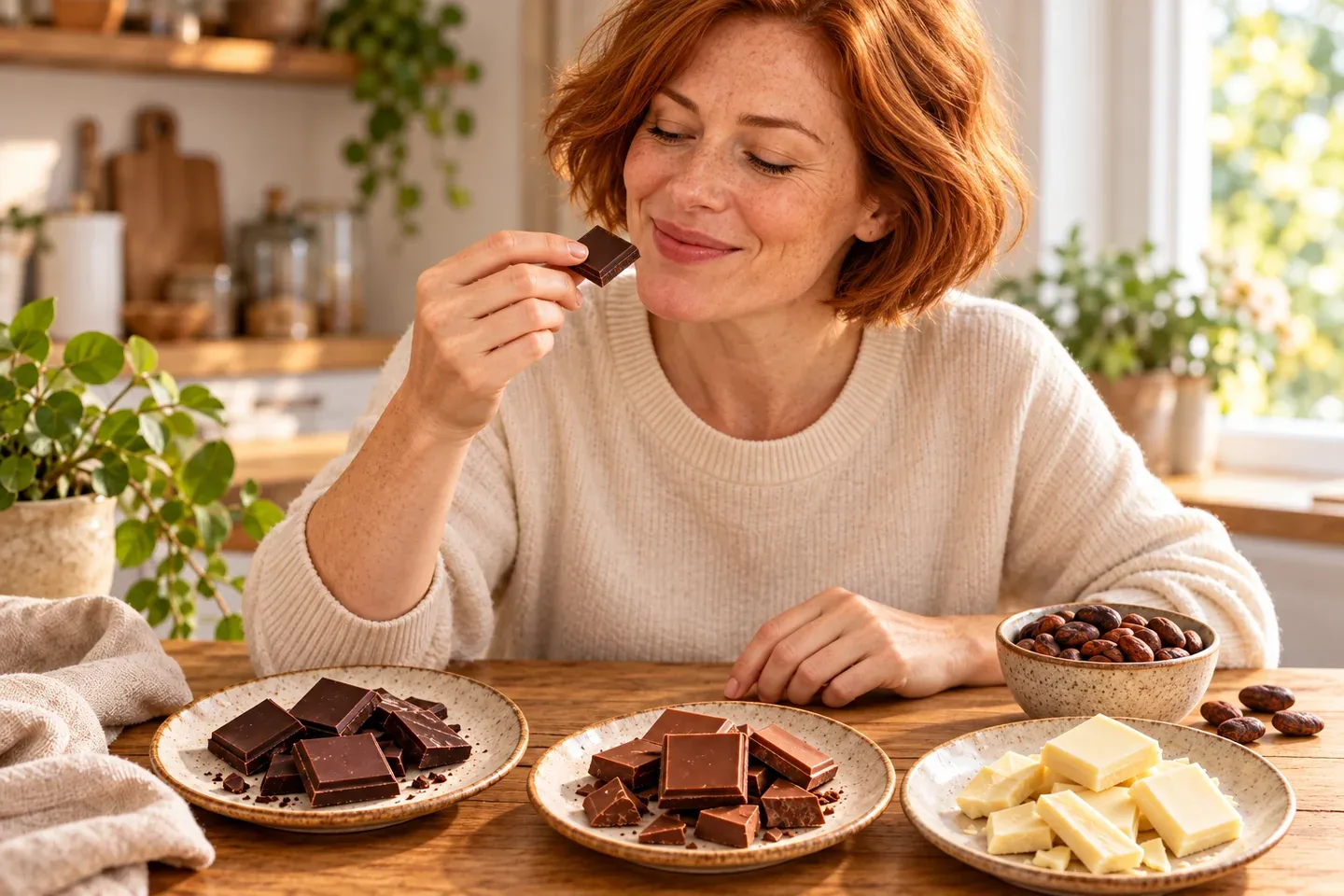
National Chocolate Day is celebrated on October 28 each year in the United States. Make it a small family celebration with a chocolate tasting, a trivia round, or a game that uses paper chocolate shapes. You can enjoy the theme without preparing an elaborate dessert or buying a big collection of sweets.
The activities below include what to gather, how to set up, how to play, and ways to include children who prefer a quieter role or are not eating chocolate. Choose one tasting or making activity and one game; that is enough for a cheerful afternoon together.
When is National Chocolate Day?
National Chocolate Day is observed on October 28. This guide follows that U.S. observance. Other chocolate celebrations have their own dates, so check the full name when planning an event.
National Chocolate Covered Raisin Day, for example, is a separate March 24 observance. October 28 celebrates chocolate more broadly. Neither should be treated as a reason to expect a school or workplace closure.
Holiday dates for planning
| Observance | 2026 | 2027 | 2028 | 2029 | 2030 |
|---|---|---|---|---|---|
| National Chocolate Day | Wednesday, October 28, 2026 | Thursday, October 28, 2027 | Saturday, October 28, 2028 | Sunday, October 28, 2029 | Monday, October 28, 2030 |
Choose your Chocolate Day activities
The times below are planning estimates, not promises about how fast every group will finish. Set out supplies before inviting people to the table. For activities involving food, check the ingredients and the needs of your participants first; a paper version can run alongside the tasting.
| Activity | Gather | Allow about | How it works |
|---|---|---|---|
| Chocolate Tasting Detectives | Three labeled chocolate samples, individual plates, water, paper | 15–20 minutes | Describe and compare samples |
| Chocolate Wrapper Memory | Six pairs of homemade paper cards | 10–15 minutes | Find matching designs |
| Design a Dream Chocolate Bar | Paper, crayons, pencils | 15–20 minutes | Invent a flavor and wrapper |
| Chocolate Clue Challenge | Five clue cards, five paper tokens | 10–15 minutes | Solve clues cooperatively |
| Chocolate Trivia Teams | Questions below, answer sheets | 10–15 minutes | Answer eight questions together |
For a small family, everyone can play together. For a classroom or larger party, use table groups and appoint one reader or helper at each table. Keep the tasting optional so that watching, describing colors, drawing wrappers, and answering questions are equally welcome ways to participate.
How to host a family chocolate tasting
The idea: Compare three chocolates and describe what makes each one different. This is an observation activity rather than a contest to see who can eat the most or guess a brand.
You need: Three suitable chocolate choices, separate serving utensils, one small plate per participant, water, pencils, and a scorecard. Plain dark, milk, and white chocolate can make a useful comparison if their ingredients suit everyone who will taste them.
Plan quantities and prepare samples
Choose one small tasting portion of each chocolate per participating person. If eight people will taste, prepare eight portions of each variety, plus a few extras for the host. The amount of chocolate to buy depends on the portion size and the bar; use its weight and suggested serving information rather than assuming every square is the same size.
- Read every ingredient label and ask about dietary requirements before buying. Keep the original packages available.
- Wash hands and set out a clean preparation area. Use separate utensils when needed to avoid mixing ingredients between samples.
- Label the varieties A, B, and C. Keep a host key showing which is which; this is a presentation device, not a reason to hide ingredients from participants.
- Place one portion of each sample on each person’s plate. Keep the three portions separate.
- Set out water and scorecards. Do not ask anyone to share a bitten piece or tasting utensil.
For participants who are not tasting, provide pictures or wrappers they can inspect. They can record color, packaging details, predictions, and descriptions shared by others. Avoid calling a substitute allergy-safe without checking its ingredients and preparation.
Run the tasting step by step
- Look at sample A before tasting. Is it pale, light brown, or dark brown? Is the surface smooth, patterned, or broken?
- Invite each person who wants to taste to try their portion. Ask for a description: creamy, bitter, sweet, firm, or another word of their choice.
- Record a word or sketch on the scorecard. Participants can choose not to give a rating.
- Pause, take a sip of water if wanted, and continue with B and C.
- Reveal the names and compare observations. Different preferences are part of the fun.
- Finish with one question: “Which sample would you choose for your imaginary dessert, and why?”
Keep tasting portions modest, let people stop whenever they want, and avoid pressuring anyone to finish a sample. Younger children can point to a descriptive picture while an adult writes their words.
Copy this chocolate tasting scorecard
Draw this table on paper or use your browser’s print option for the article. There is no separate download required.
| Sample | Color or appearance | A word to describe it | My optional rating, 1–5 | A dessert idea |
|---|---|---|---|---|
| A | __________ | __________ | __________ | __________ |
| B | __________ | __________ | __________ | __________ |
| C | __________ | __________ | __________ | __________ |
If ratings lead to an argument about which chocolate is “best,” replace that column with “something I noticed.” The aim is to compare observations, not to agree on a winner.
Chocolate games for kids and families
Chocolate Wrapper Memory
You need: Twelve equal-sized pieces of cardstock, crayons, and an envelope for storing them. Allow: 10–15 minutes. Group: Two to four players per set.
Make six pairs of pretend wrappers. Use a large, recognizable symbol for each pair: a star, a heart, a leaf, a moon, a circle, and a zigzag. Draw the same symbol and colors on both cards in a pair. Leave the backs alike so they do not give the answer away.
- Shuffle the twelve cards and lay them face down in three rows of four.
- The first player turns over two cards so everyone can see them.
- If the designs match, that player keeps the pair. If they do not, return both cards face down to the same positions.
- Pass the turn to the next person whether or not a match was found.
- Continue until all six pairs have been collected.
Count one point per pair for a competitive game, or work together to find all the pairs without scoring. For younger children, begin with three pairs. Older children can make more pairs, but keep each design clearly different.
Reset by collecting and shuffling the cards. Paper pieces keep this game usable even when no chocolate is being served.
Design a Dream Chocolate Bar
You need: Paper, crayons, pencils, and a few empty wrapper examples for inspiration. Allow: 15–20 minutes. Group: Individuals or pairs.
Invite each designer to invent a pretend bar. They can choose an imaginative flavor such as Moonbeam Crunch or Strawberry Cloud; make it clear that the activity is drawing, not a real recipe or a promise that the ingredients will work together.
- Fold a sheet in half. Use the front for the wrapper and the inside for a drawing of the bar.
- Give the bar a name and draw a simple symbol that identifies it.
- Draw the inside: smooth layers, crunchy shapes, or a completely imaginary filling.
- Add a sentence describing the flavor and who might enjoy it.
- Share the design with the group or display it in a small gallery.
Offer a choice of two colors and a large bar outline to younger children. Older children can add a pretend advertisement or compare how their package design communicates the flavor. Do not label pretend ingredients as real nutritional information.
Skip voting for a single winner. Instead, invite everyone to notice one detail in somebody else’s design. The activity works nicely as a calm break between games.
Chocolate Clue Challenge
You need: Five paper squares that stand for chocolate pieces, five clue cards, and a gathering spot. Allow: 10–15 minutes. Group: One cooperative group, or separate color-coded sets for several groups.
Write one letter on each square: C, O, C, O, A. Hide them at the five locations below. These are household or classroom clues; adjust any that do not point to a single clear location in your space.
| Letter | Read this clue | Host hiding location |
|---|---|---|
| C | “Stories stand here, waiting to be read.” | The chosen bookshelf or book basket |
| O | “Find the seat where our reader sits.” | Beside the designated reading chair |
| C | “Colors wait here until a picture begins.” | Beside the crayon container |
| O | “This flat place holds our drawings and games.” | On the activity table |
| A | “Look where our clean paper waits.” | Beside the paper stack |
- Explain which room or area is included. Keep the tokens accessible without climbing or opening private storage.
- Read the first clue. Let the group agree on an answer, then walk to the location together.
- Collect the letter and return it to the gathering spot.
- Continue through the five clues in order.
- Arrange the letters into COCOA. Give younger children a sample word to match.
- Ask everyone to name one thing they learned about chocolate or one idea for the dream-bar activity.
Two pairs of letters repeat, so children should use all five tokens rather than looking for five different letters. There is no speed prize; the challenge is solving the clues together. Reset by putting each letter back in its original location.
Chocolate trivia questions and answers
Use these eight questions for a short team round. The factual answers draw on the National Confectioners Association’s explanation of chocolate types and the Natural History Museum of Utah’s chocolate FAQ, alongside the holiday date explained above.
- What date is U.S. National Chocolate Day? October 28.
- Chocolate starts with seeds from what tree? The cacao tree.
- What is the fat from cacao beans called? Cocoa butter.
- Which chocolate type contains cocoa butter but no cocoa solids: dark, milk, or white? White chocolate.
- What ingredient helps give milk chocolate its name? Milk ingredients, such as milk solids.
- Are cocoa butter and dairy butter the same ingredient? No. Cocoa butter is the fat from cacao beans.
- True or false: white chocolate contains no ingredients from cacao beans. False. Its cocoa butter comes from cacao beans.
- Is Chocolate Covered Raisin Day the same October observance? No. Chocolate Covered Raisin Day is March 24; this Chocolate Day is October 28.
How to play: Give each team one answer sheet. Read one question, allow about thirty seconds for discussion, and ask teams to write their answers before moving on. Award one point per correct answer, for a maximum of eight. Read the explanations after the round so nobody misses a fact while discussing the next question.
For younger children, offer two choices aloud or let adults and children partner. If teams tie, share the result; an optional creative question such as “What would you name a new chocolate bar?” can be a closing activity without affecting the factual score.
A thirty-minute Chocolate Day celebration
Prepare the samples or game cards before the group arrives. This schedule uses a short tasting and trivia; a craft-focused group can replace the tasting with wrapper design.
| Time | What to do |
|---|---|
| First 3 minutes | Explain the date and offer tasting or observation roles |
| Next 12 minutes | Compare three chocolate samples and complete scorecards |
| Next 10 minutes | Play the eight-question trivia round and share answers |
| Final 5 minutes | Show a favorite scorecard observation and tidy up |
For a longer gathering, add Wrapper Memory or Dream Chocolate Bar after a break. Keep an extra table available for people who would rather draw than taste.
If you are planning several October celebrations, our Pumpkin Day activities and Candy Corn Day games offer different paper crafts and play ideas. A Caramel Apple Day celebration can be another family activity later in October.
National Chocolate Day questions
Is National Chocolate Day always October 28?
The U.S. National Chocolate Day covered here is October 28 each year. Its weekday changes. Other chocolate-themed days and observances in other countries can use different dates, so match the name and country before adding one to your calendar.
What are easy Chocolate Day activities for kids?
A paper-wrapper memory game, a dream chocolate bar drawing, a five-stop clue trail, and an adult-guided tasting are easy starting points. Choose activities based on the group and the available materials; none needs a complicated dessert recipe.
Can we celebrate without eating chocolate?
Yes. Wrapper Memory, Dream Chocolate Bar, Chocolate Clue Challenge, and the trivia round all work without eating anything. A non-tasting participant can also observe colors and packaging during a tasting.
How much chocolate should I buy for a tasting?
Plan one small portion of each chosen sample per participating person. For eight tasters and three varieties, that means twenty-four tasting portions. Check the weight and size of the products you choose rather than assuming all bars have interchangeable squares.
Is white chocolate the same as milk chocolate?
No. White chocolate contains cocoa butter and milk ingredients but no cocoa solids. Milk chocolate includes cocoa solids as well as milk ingredients. Use the packages to identify the actual products you are serving.
Is there a printable for the games?
The scorecard and clue table are included in this article. Copy them onto paper or print the page. The wrapper cards and dream-bar designs are homemade activities; no paid download is needed to use this guide.
Are National Chocolate Day deals guaranteed?
No. A holiday listing does not establish that a shop is running a promotion. Check any offer directly with the business, including its date, participating locations, and conditions, before making plans around it.